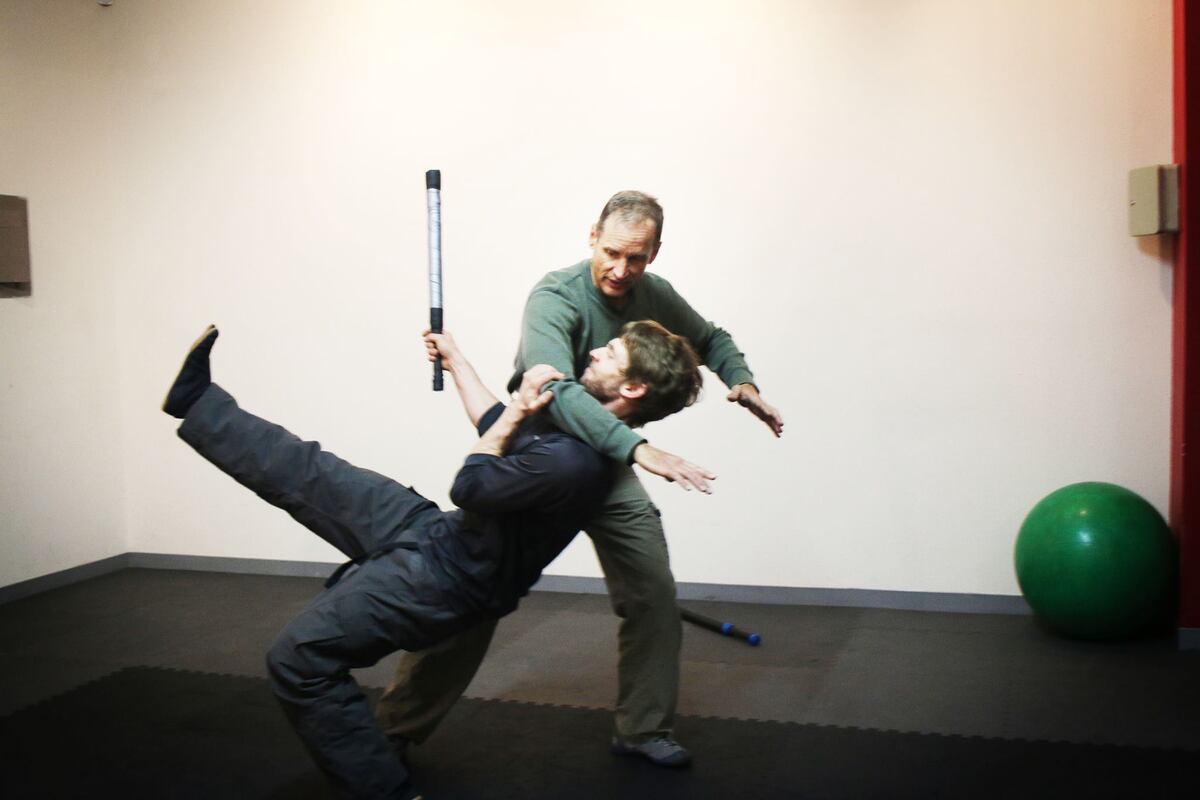
What is WARRIOR PATH?
Warrior Path is an ongoing adult martial arts and practical self-defense program for people who want to learn how to fight, protect themselves, and become more confident in their ability to handle real-world confrontation.
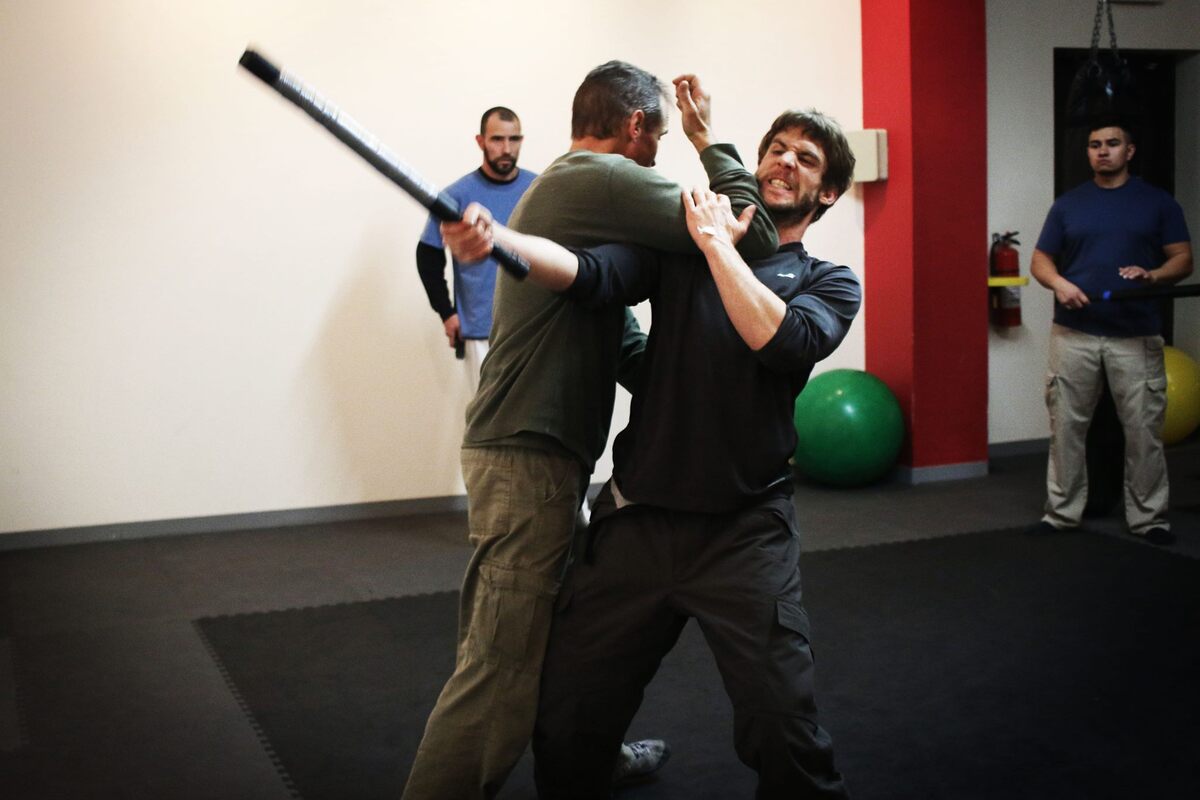
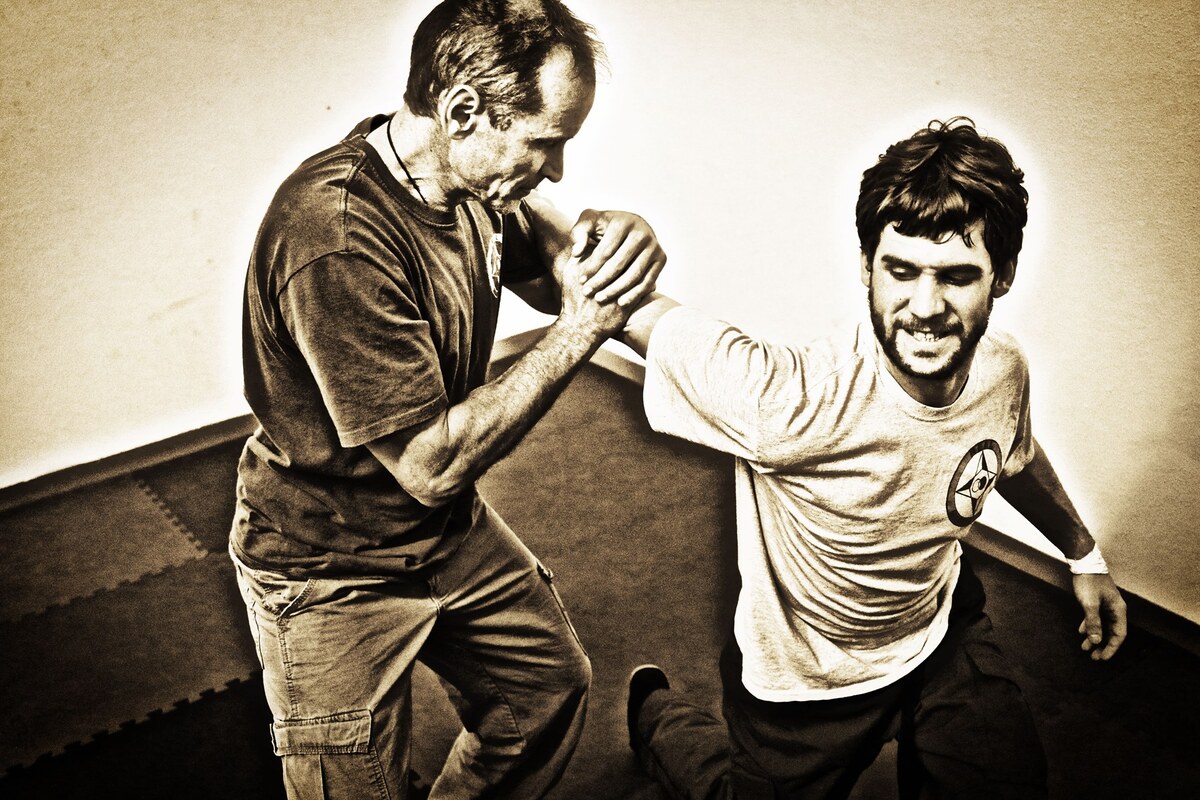
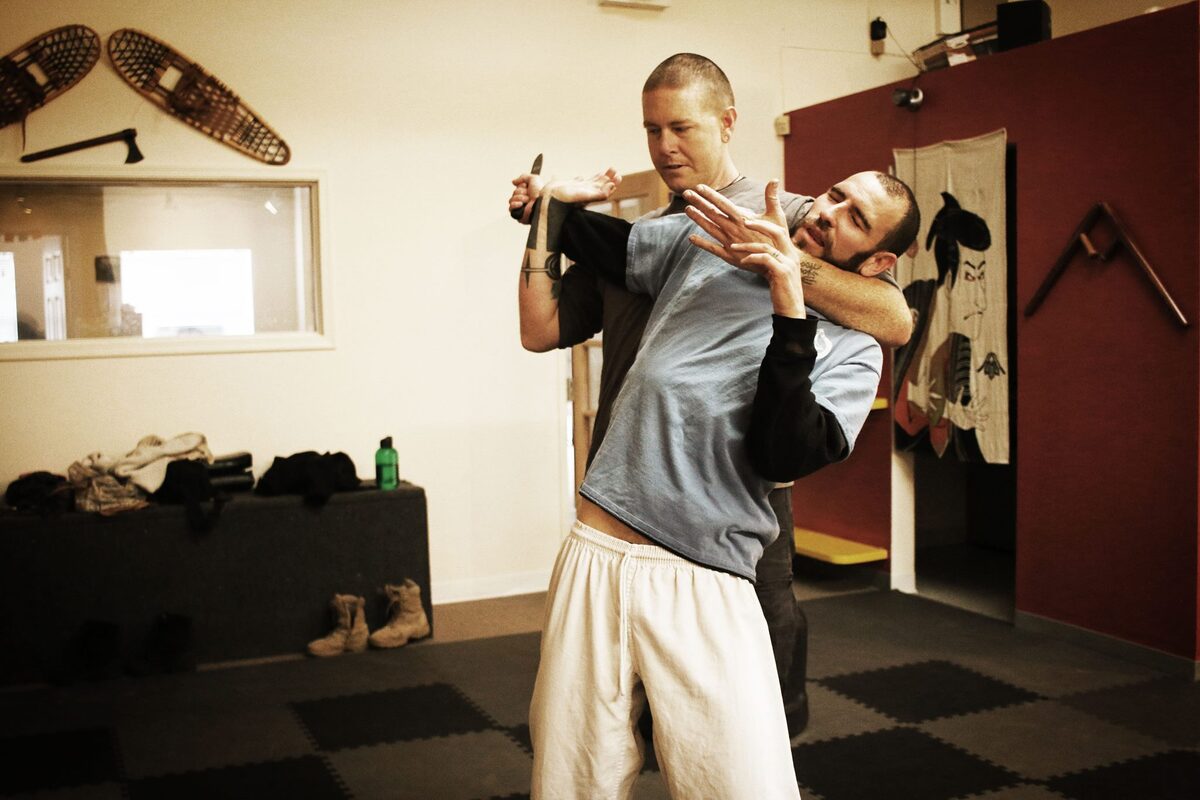
Training develops practical fighting skills across the full range of physical conflict. You'll learn striking, kicking, close-range fighting, grappling, ground defense, and defense against common weapons and attacks. Rather than training for competition or points, Warrior Path focuses on skills that can actually be used when personal safety is at risk.
You don't need previous martial arts experience. Beginners are welcome, along with students who have trained in martial arts, self-defense, military, security, or law enforcement systems. Training is progressive, allowing you to develop solid fundamentals and continue building your skills as your experience increases.
Warrior Path isn't limited to one traditional martial art or fighting style. People searching for Krav Maga, kickboxing, Muay Thai, BJJ or Jiu-Jitsu are often looking for many of the same capabilities we train: effective striking, controlling someone at close range, defending yourself on the ground, dealing with weapons, and functioning under pressure. Warrior Path brings these areas together through a practical modern combatives approach rather than specializing in a single style or sport.
But knowing how to fight is only part of knowing how to protect yourself. Training also develops situational awareness, threat recognition, verbal skills, avoidance, and decision-making under stress. The objective is to recognize trouble early and avoid unnecessary violence whenever possible—while having the physical skills and confidence to act when avoidance is no longer an option.
If you want practical martial arts and self-defense training that prepares you for more than a tournament or a controlled training environment, Warrior Path gives you a place to train consistently, develop real capability, and become harder to intimidate and better prepared to protect yourself and the people around you.
Whether you're completely new to personal protection or have years of experience, you're welcome to join us. For your first class please register in advance so we know when to expect you. Click the button below and we'll be ready to welcome you.
How does WARRIOR PATH work?
Warrior Path is not built around memorizing dozens of techniques, forms, or predetermined responses. The goal is simpler: develop a small set of reliable principles and skills that can be applied to changing problems under pressure.
A Small Toolbox. A Lot of Problems.
Real conflict is unpredictable. You don't know exactly how someone will attack, how large or strong they will be, where you will be standing, or what obstacles may be around you.
Trying to memorize a separate response for every possible situation creates an enormous curriculum and an equally large decision-making problem when something actually happens.
Warrior Path takes the opposite approach.
We reduce the number of movements and decisions wherever possible and develop the ability to apply them across many different situations.
The objective is not to know more techniques.
It is to become better at solving problems with fewer, more adaptable tools.
Feet First. Body Second. Hands Third.
This is one of the fundamental movement principles of Warrior Path.
Rather than trying to stop every attack by chasing it with the hands, we first change our position.
Move the feet.
Reposition the body.
Then use the hands.
This changes angles, improves structure, and allows the entire body to contribute to the response rather than relying primarily on arm strength or speed.
The same principle carries through striking, defensive movement, takedowns, ground movement, weapons training, and escapes from confined positions.
Simple Responses to Common Problems
Instead of accumulating dozens of defensive techniques, students learn to recognize basic types of movement and attack.
Circular attacks are addressed primarily through wedge-based structures.
Linear attacks are addressed primarily through movement, redirection, and deflection.
From there, students learn to create an immediate disruption and recognize what the situation gives them next.
Sometimes the appropriate answer is to disengage and leave.
Sometimes another action is necessary to create that opportunity.
In professional applications such as security, continued control may be required.
The mechanics remain consistent even when the objective changes.
Resistance Creates the Next Decision
Techniques rarely work exactly as planned against another human being.
That's expected.
Students begin with enough cooperation to understand the movement. Speed and resistance are then progressively increased.
Eventually something stops working.
Instead of treating that as failure, we use it as information.
If an opponent changes position, stiffens, pulls, pushes, bends an arm, straightens an arm, or otherwise defeats the first option, that resistance often creates another opportunity.
Students learn to recognize those changes and transition rather than simply trying harder to force something that is no longer working.
Same Training. Different Levels.
A person who has trained for two weeks may be working on the same drill as someone who has trained for two years.
What changes is the expectation.
The newer student may simply be learning to maintain balance, move their feet, find the correct angle, and function against gradually increasing resistance.
The experienced student may be expected to solve the same problem against greater resistance, recognize transitions earlier, eliminate unnecessary movement, recover from failed attempts, and make better decisions.
Progress therefore does not require constantly adding more techniques.
We add complexity to the problem.
Different partners. Different body types. Increased resistance. Walls and confined spaces. Standing and ground transitions. Unsuccessful first attempts. Changing positions and unexpected reactions.
The principles remain familiar while the problems become increasingly difficult.
Empty Hand and Weapons
Warrior Path uses the same fundamental body mechanics whenever possible whether the student is empty-handed or working with training weapons.
Students work primarily with:
Empty hand
Stick
Knife
Firearm-related movement and control may also be introduced in appropriate training contexts, but it represents a smaller and more specialized part of the curriculum.
The objective is not to create four completely different systems. It is to develop transferable movement principles that remain recognizable as the circumstances change.
Training for Adaptability
Warrior Path is ultimately about decision-making.
Can you recognize what is happening?
Can you move effectively?
Can you maintain your structure when someone resists?
Can you recognize when your first solution isn't working?
Can you transition without freezing?
Can you determine when it's time to disengage?
Those abilities aren't developed by collecting techniques. They're developed by repeatedly solving increasingly difficult problems.
That is why Warrior Path can accommodate people with very different levels of experience in the same class.
The beginner learns the language.
The experienced student learns to speak it under increasingly difficult conditions.
The goal isn't to memorize more answers.
The goal is to become better at solving problems.
505-913-0199